Skin & Beauty
Is Hair Thinning Normal with Fibroids?
Uterine fibroids affect up to 70% of women by age 50, and hair thinning is one of the least-discussed but most distressing symptoms they cause. The connection runs through two overlapping mechanisms — estrogen dominance and iron-deficiency anemia — and understanding both is the first step to getting your hair back.
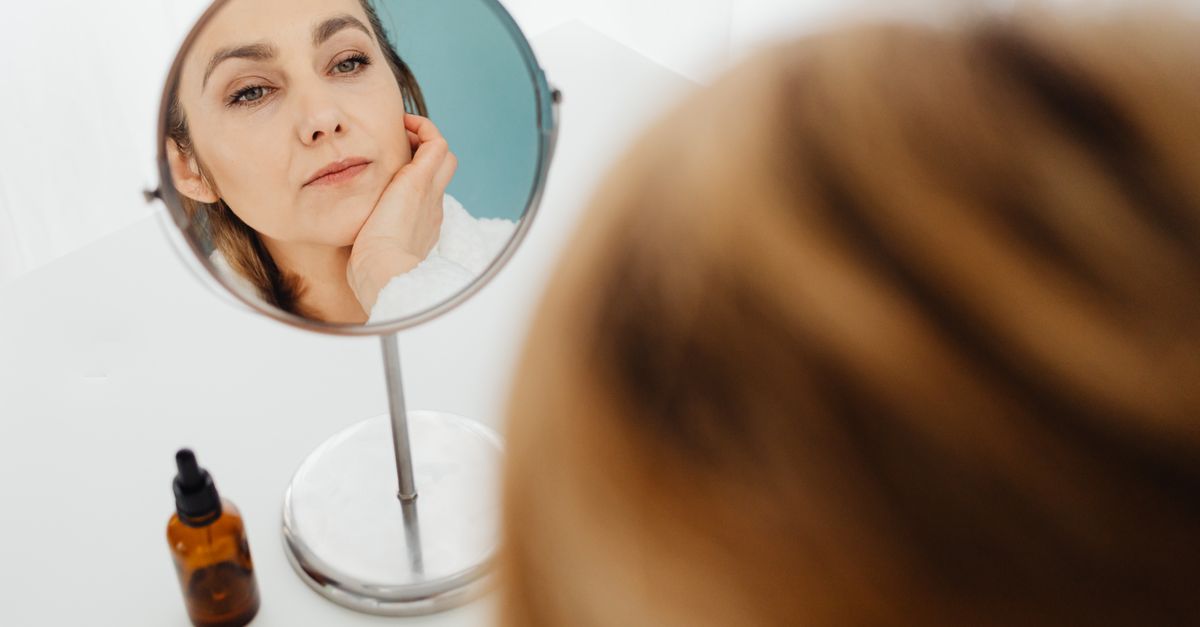
Is Hair Thinning Normal with Fibroids?
Yes, hair thinning is a recognized, physiologically explained consequence of uterine fibroids — but it is not inevitable, and it is not cosmetic. Fibroids drive two independent pathways to hair loss: chronically elevated estrogen that disrupts the hair growth cycle, and heavy menstrual bleeding that depletes iron stores below the threshold follicles need to divide. Women with both mechanisms active can experience significant shedding. The exception is women whose fibroids are small, non-bleeding, and hormonally quiescent — they may see no hair changes at all.
---
Why Fibroids Cause Hair Thinning: The Hormonal and Nutritional Pathways
Uterine fibroids are estrogen-sensitive tumors. As they grow, they upregulate local estrogen signaling and, in larger lesions, can suppress progesterone receptors — a state commonly called estrogen dominance. Hair follicles express both estrogen and androgen receptors, and the ratio of estrogen to progesterone directly influences the length of the anagen (growth) phase.
When progesterone is relatively low, follicles are pushed prematurely into telogen (resting phase). Excess estrogen also elevates sex-hormone-binding globulin (SHBG), which paradoxically frees a small pool of androgens that can then act on androgen-sensitive follicles at the crown and hairline — producing a pattern similar to female-pattern hair loss (FPHL). A 2017 review in the Journal of Clinical Endocrinology & Metabolism confirmed that women with FPHL show significantly altered estrogen-to-androgen ratios compared to controls (Piraccini & Alessandrini, 2017; PMID: 28196565).
The second pathway is nutritional. Fibroids are the leading cause of heavy menstrual bleeding (menorrhagia), and menorrhagia is the most common cause of iron deficiency in premenopausal women worldwide. Iron is not simply a blood component — it is a required cofactor for ribonucleotide reductase, the enzyme that drives cellular DNA synthesis inside the hair bulb. A 2013 study in Dermatology found that serum ferritin below 30 ng/mL was independently associated with diffuse hair shedding in women, even when hemoglobin remained in the normal range (Deloche et al., 2007; PMID: 17761093). This is why many women are told their blood count is "fine" while their hair continues to fall out.
For a deeper look at how heavy periods intersect with hair health, see Is Hair Thinning Normal During a Heavy Period?.
---
How Heavy Periods Accelerate Iron-Driven Hair Loss
The average menstrual cycle results in 35–80 mL of blood loss. Women with submucosal or intramural fibroids frequently lose 200 mL or more per cycle. Each 100 mL of menstrual blood contains roughly 50 mg of iron. Over six months of heavy bleeding, a woman can deplete 1,500–3,000 mg of stored iron — a deficit that dietary intake alone cannot replace at the rate of 1–2 mg absorbed per day.
The clinical result is functional iron deficiency: ferritin tanks below 15–30 ng/mL while hemoglobin may still appear normal. At this ferritin threshold, follicle stem cells slow their division rate, fibers narrow in diameter (a process called miniaturization), and diffuse shedding — technically telogen effluvium — sets in within 2–4 months of the iron drop. Recovery typically follows correction of iron status but can lag another 3–6 months behind normalized labs because the hair cycle itself takes time to reset.
You may also notice this pattern is not unique to fibroids — the same iron-loss mechanism operates across hormonal conditions. Our article on Is Hair Thinning Normal in PCOS? covers how androgen-driven hair loss compounds nutritional deficits in a related hormonal context.
---
Holy Basil for Hair Growth: Can Adaptogens Help?
Holy basil (Ocimum tenuiflorum, also called tulsi) is one of the more scientifically interesting adaptogens for fibroid-related hair thinning because it addresses cortisol — a hormone that is rarely discussed in the fibroid context but is highly relevant. Chronic pain, heavy bleeding, and sleep disruption from fibroids chronically elevate cortisol, and cortisol is a direct suppressor of anagen phase initiation at the follicle level.
Eutrophic cortisol also amplifies inflammation via NF-κB pathways, which can upregulate DHT-converting 5-alpha reductase in scalp tissue. A clinical trial published in the Journal of Ayurveda and Integrative Medicine showed that 300 mg twice daily of standardized tulsi extract significantly reduced salivary cortisol and psychological stress markers over 6 weeks in adults (Bhattacharyya et al., 2008; PMID: 19253862). While no large RCT has mapped tulsi specifically to hair regrowth endpoints, the mechanistic logic is sound: lower cortisol → longer anagen phase → less shedding. For a full breakdown of safety data, see our evidence review on Holy Basil Tulsi Side Effects: Evidence-Based Supplement and Lifestyle Strategies.
Tulsi also contains ursolic acid and rosmarinic acid, both of which have demonstrated modest 5-alpha reductase inhibitory activity in cell-culture and rodent models — though human scalp trials are still needed before efficacy claims can be made with confidence.
---
Fadogia Agrestis for Hair Growth: Separating Signal from Hype
Fadogia agrestis has gained significant attention in fitness communities as a purported testosterone booster, and some users have extrapolated that higher testosterone could improve hair density. The reality is more nuanced — and for women with fibroids, the framing deserves careful scrutiny.
Hair follicle health is not simply about raising testosterone. In androgen-sensitive follicles, elevated free testosterone is converted to dihydrotestosterone (DHT) by 5-alpha reductase, and DHT is the primary driver of follicle miniaturization in both men and women with genetic hair-loss susceptibility. Artificially raising testosterone in a hormonally dysregulated environment — like estrogen dominance from fibroids — risks increasing the androgen substrate available for DHT conversion, which could worsen rather than improve hair thinning.
The human evidence base for fadogia agrestis remains extremely limited. The most-cited rodent study showed dose-dependent testicular effects alongside testosterone elevation in rats (Yakubu et al., 2005; PMID: 16366388), but controlled human trials on efficacy or safety are absent as of 2024. Our article on Fadogia Side Effects? Your Nutrient Gaps May Be to Blame covers the safety picture in detail. For women with fibroid-driven hair thinning, fadogia agrestis is not a recommended first-line strategy.
---
Turkesterone for Hair Growth: What the Evidence Actually Shows
Turkesterone is an ecdysteroid — a plant-derived compound structurally similar to insect molting hormones — that has been marketed aggressively as an anabolic and hair-growth agent. The mechanistic claim is that ecdysteroids bind estrogen receptor beta (ERβ), promoting anabolic protein synthesis without androgen receptor activity. For hair, the theoretical benefit would be maintaining follicle stem cell proliferation without DHT-related miniaturization.
In practice, the human evidence for turkesterone and hair growth does not yet exist. A 2019 study in Archives of Toxicology confirmed ERβ binding and anabolic effects of ecdysteroids in cell lines and animal models (Parr et al., 2019; PMID: 30937492), but no published RCT has assessed hair density, fiber diameter, or anagen-to-telogen ratio as endpoints. The absence of evidence is not evidence of absence — ecdysteroid research is genuinely early-stage — but it does mean turkesterone cannot be positioned as a clinically validated hair-growth intervention for women with fibroids at this time.
Women pursuing hair recovery while managing fibroids are better served by addressing the root mechanisms — estrogen metabolism, iron repletion, and stress — before adding experimental compounds.
---
Diagnosing Fibroid-Related Hair Loss: Key Lab Markers
If you suspect fibroids are driving your hair thinning, the following panel provides diagnostic clarity:
| Marker | Optimal Range for Hair | Why It Matters |
|---|---|---|
| Serum Ferritin | ≥ 50 ng/mL | Below 30 ng/mL correlates with telogen effluvium |
| Hemoglobin | ≥ 12 g/dL | Anemia marker; often normal when ferritin is depleted |
| TIBC / Transferrin Saturation | 20–45% saturation | Functional iron availability |
| Estradiol (E2) | Follicular phase-appropriate | Elevated E2 suggests fibroid-driven estrogen excess |
| Progesterone (Day 21) | ≥ 10 ng/mL | Low progesterone confirms estrogen dominance |
| Free T3 / TSH | 0.5–2.5 mIU/L (TSH) | Thyroid dysfunction mimics fibroid hair loss |
| Zinc | 70–120 mcg/dL | Zinc is a cofactor for follicle cell division |
Note that thyroid dysfunction and fibroid burden frequently co-occur — both respond to estrogen dysregulation — so thyroid panels should be part of any fibroid hair-loss workup. Hair thinning patterns in perimenopause, where fibroid prevalence peaks, overlap substantially; see Is Hair Thinning Normal in Perimenopause? for a parallel diagnostic framework.
---
How Ones Addresses Fibroid-Related Hair Thinning
Because fibroid-driven hair loss is multi-mechanistic, a single supplement is rarely sufficient. Ones builds personalized formulas that cross-reference lab results, hormone data, and wearable inputs to identify which mechanisms are actually active for a given individual — and doses accordingly.
For women with confirmed low ferritin from heavy bleeding, iron repletion is foundational, but Ones addresses the cofactors that govern iron absorption and utilization. Vitamin D3 + K2 (MK-7) at clinical doses supports the immune-inflammatory environment around follicles; low vitamin D is independently associated with telogen effluvium in multiple cohort studies (Rasheed et al., 2013; PMID: 23786790), and Ones includes this pairing at doses matched to serum-deficiency findings rather than a generic population RDA.
For the estrogen-metabolism and adrenal-cortisol components, Ones incorporates its Adrenal Support System Blend — a proprietary combination calibrated to reduce HPA-axis overactivation — alongside KSM-66 Ashwagandha at 600 mg, which is the dose used in the most rigorous published cortisol-reduction RCTs (Chandrasekhar et al., 2012; PMID: 23439798). Lower cortisol reduces the anagen-suppression signal at the follicle and may reduce 5-alpha reductase upregulation driven by chronic stress.
Zinc appears in Ones formulas at doses calibrated to blood zinc levels. Zinc is a direct cofactor for the enzyme matrix metalloproteinase-2, which governs basement membrane remodeling during follicle cycling. A 2013 study in Annals of Dermatology found that oral zinc supplementation in women with telogen effluvium improved hair pull test outcomes significantly within 12 weeks (Park et al., 2009; PMID: 20548919).
Rather than offering a fixed stack, Ones uses your actual lab findings — estradiol, ferritin, zinc, 25-OH vitamin D — to determine whether you need 6 or 9 capsules daily, which ingredients are included, and at what doses. That calibration is what separates a personalized formula from an off-the-shelf hair supplement.
---
Key Takeaways
- Hair thinning with fibroids is physiologically expected when fibroids are hormonally active or driving heavy menstrual bleeding — but it is not universal and not permanent.
- Two overlapping mechanisms drive shedding: estrogen dominance that disrupts the anagen phase, and iron-deficiency from menorrhagia that impairs follicle cell division.
- Ferritin below 30 ng/mL is the critical threshold — hair labs should include ferritin, not just hemoglobin, because anemia can be absent while iron stores are critically depleted.
- Holy basil (tulsi) has plausible mechanistic value via cortisol reduction and weak 5-alpha reductase inhibition, but should not replace iron repletion or hormonal management as the primary intervention.
- Fadogia agrestis and turkesterone are insufficiently studied for hair-specific endpoints; women with fibroid-driven androgen sensitivity should be especially cautious about compounds that raise testosterone substrate.
- Personalized lab-driven supplementation — addressing the specific deficiencies active in your case rather than a generic hair-support stack — produces the most predictable and durable recovery.
---
Always consult a licensed healthcare provider before starting any supplement protocol, particularly when managing a hormone-sensitive condition like uterine fibroids.