Thyroid
What Is a Normal Thyroid Antibodies Level in PCOS?
Women with PCOS are two to four times more likely to carry elevated thyroid antibodies than the general population — yet most standard PCOS panels never order them. Understanding where your TPO-Ab and TgAb numbers should land can change how aggressively you and your provider approach thyroid care.
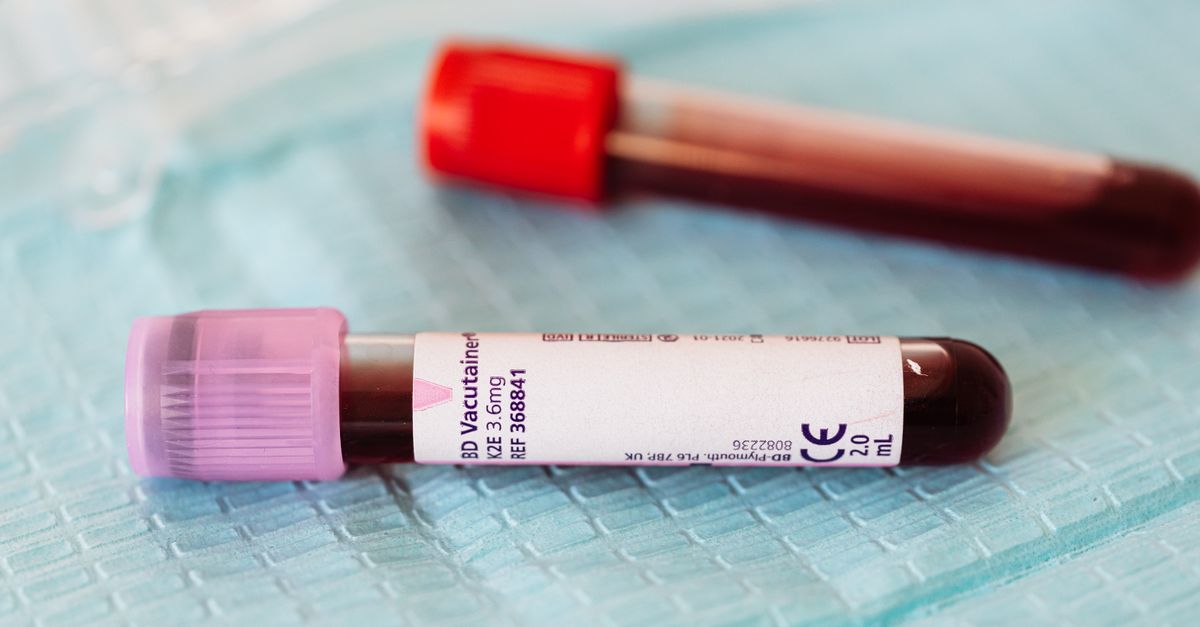
What Is a Normal Thyroid Antibodies Level in PCOS?
For most people with PCOS, thyroid antibody levels should ideally be undetectable — below 34 IU/mL for TPO-Ab and below 115 IU/mL for TgAb on widely used laboratory reference ranges. The main caveat: labs vary, and "within range" does not mean "no risk." Women with PCOS who have TPO-Ab above 10–15 IU/mL — even within the technical normal — face a meaningfully higher likelihood of progressing to Hashimoto's or hypothyroidism over time.
---
Why Thyroid Antibodies Matter More in PCOS Than Standard Ranges Suggest
Polycystic ovary syndrome is primarily discussed as a reproductive and metabolic condition, but thyroid autoimmunity is one of its most overlooked co-travelers. Research published in the European Journal of Endocrinology found that the prevalence of thyroid autoimmunity — defined by elevated TPO-Ab — was significantly higher in women with PCOS compared to matched controls (Janssen et al., 2004; PMID: 15229330). A separate meta-analysis confirmed that women with PCOS have approximately 2.8 times the odds of Hashimoto's thyroiditis compared to age-matched women without PCOS (Sategna-Guidetti et al., Thyroid 2003; PMID: 12906231).
This overlap matters clinically because both conditions share immune-dysregulation pathways, insulin resistance, and inflammatory signaling. Elevated thyroid antibodies in the presence of PCOS can worsen menstrual irregularity, amplify fatigue, and make weight management substantially harder — even when TSH and Free T4 remain technically within range. If you are comparing your Free T4 result alongside TSH, the guide on what is a normal Free T4 level in PCOS gives a useful companion breakdown.
---
What Are Thyroid Antibodies — and Which Ones Are Tested?
Thyroid antibodies are immune proteins that mistakenly target thyroid tissue. There are three clinically relevant types:
| Antibody | Full Name | What It Attacks | Key Association |
|---|---|---|---|
| TPO-Ab | Thyroid peroxidase antibody | Enzyme essential for thyroid hormone synthesis | Hashimoto's thyroiditis |
| TgAb | Thyroglobulin antibody | Protein precursor to T3 and T4 | Hashimoto's, Graves' |
| TSH-R Ab | TSH receptor antibody | TSH receptor on thyroid cells | Graves' disease |
In PCOS workups, TPO-Ab is the most clinically useful single test. TgAb adds value when TPO-Ab is borderline or when symptoms are unexplained. TSH-R Ab is primarily ordered when hyperthyroidism is suspected, which is less common in PCOS.
---
Reference Ranges: What Is "Normal" for Thyroid Antibodies in PCOS?
Laboratory reference ranges for thyroid antibodies differ by assay platform, but the most commonly used thresholds are:
| Antibody | Most Labs' Upper Limit | Low-Risk Functional Target | High-Risk Threshold |
|---|---|---|---|
| TPO-Ab | < 34–35 IU/mL | < 10 IU/mL | > 100 IU/mL |
| TgAb | < 115 IU/mL | < 20 IU/mL | > 200 IU/mL |
Important context: these are population-derived cutoffs, not personalized thresholds. A TPO-Ab of 30 IU/mL is "within range" but is 3–6 times higher than what many integrative endocrinologists consider low-risk in someone with PCOS and already-disordered insulin signaling.
In a prospective Italian study of women with subclinical hypothyroidism, those with TPO-Ab above 10 IU/mL — while still technically "normal" — progressed to overt hypothyroidism at a significantly higher rate over a five-year follow-up (Vanderpump et al., Clinical Endocrinology 1995; PMID: 7641412). This underscores why treating "within range" as "problem solved" is inadequate for the PCOS population.
---
The Psychological Toll: What Elevated Thyroid Antibodies Do to the Mind in PCOS
Living with undiagnosed or undertreated thyroid autoimmunity on top of PCOS creates a psychological burden that laboratory numbers can barely capture. Many people spend months cycling through unexplained fatigue, brain fog, mood instability, and anxiety — all while being told their thyroid "looks fine" because TSH is in range.
The bidirectional relationship between thyroid hormones and mood is well documented. Subclinical hypothyroidism — often the earliest functional consequence of rising TPO-Ab — is associated with higher rates of depression and anxiety even before TSH exceeds 10 mIU/L (Bauer et al., Journal of Clinical Psychiatry 2002; PMID: 12088158). When you layer the hormonal dysregulation of PCOS on top of that, the psychological weight compounds. Androgen excess can drive mood volatility; insulin resistance contributes to energy crashes; and now add a slowly failing thyroid — the result is a symptom picture that is genuinely exhausting to navigate, let alone explain to a provider.
This is not a character deficit or anxiety disorder. It is a physiological cascade, and naming it helps. If your thyroid antibodies are elevated, the cognitive and emotional symptoms you may be experiencing — the "why am I this tired, why can't I think straight, why does everything feel harder" — have a mechanistic basis. Getting TPO-Ab tested and treated is not a minor footnote; it is central to quality of life.
For those also monitoring related hormonal markers, checking what is a normal DHEA-S level with PCOS can help clarify whether adrenal androgens are compounding mood and fatigue symptoms on top of thyroid autoimmunity.
---
Hashimoto's, PCOS, and the Tumors You Weren't Told About
Thyroid nodules and benign adenomas are more prevalent in women with longstanding Hashimoto's. The chronic inflammatory milieu of autoimmune thyroiditis creates structural changes over time — follicular disruption, fibrosis, and nodule formation — that occasionally require imaging follow-up. While the vast majority of these findings are benign, they can alter thyroid hormone output meaningfully.
Insulin resistance — the central metabolic driver of PCOS — independently promotes thyroid cell proliferation via IGF-1 signaling. A 2014 study in Thyroid demonstrated that insulin resistance was significantly associated with thyroid nodule prevalence even after controlling for BMI and TSH (Anil et al., Thyroid 2009; PMID: 19791831). This means women with PCOS are navigating a double exposure: autoimmune attack on thyroid tissue and metabolic pressure driving structural changes.
If a thyroid nodule is discovered on ultrasound during a PCOS workup, it should not be dismissed as coincidental. It warrants tracking — both because of autoimmune background and because insulin resistance creates a hormonal environment that can accelerate nodular growth. Discuss the Thyroid Imaging Reporting and Data System (TI-RADS) classification with your provider to understand whether watchful waiting or biopsy is appropriate.
---
Constipation, Thyroid Antibodies, and the PCOS Gut Connection
Constipation is one of the most stubborn and least-discussed symptoms in the PCOS-thyroid overlap. When thyroid hormone output declines — even modestly, in the subclinical range — gut motility slows. The migrating motor complex, which coordinates intestinal movement between meals, is directly regulated by thyroid hormones. In hypothyroidism, this complex slows by up to 40%, explaining the bloating, transit delays, and constipation that resist dietary fixes.
In PCOS specifically, progesterone dysregulation can further suppress gut motility, and elevated androgens may worsen intestinal permeability. If you are struggling with constipation that does not resolve with fiber increases, hydration, or magnesium, and you have not had your TPO-Ab and TgAb checked alongside your normal thyroid level in PCOS workup, thyroid autoimmunity deserves serious consideration as a contributing cause.
Checking fasting insulin is also worthwhile here — insulin resistance drives systemic inflammation and has indirect effects on gut function. The normal fasting insulin level in PCOS guide explains what to look for and how that number interacts with metabolic health more broadly.
---
What Causes Elevated Thyroid Antibodies in PCOS?
The mechanisms connecting PCOS and thyroid autoimmunity are still being mapped, but several pathways stand out:
- Immune dysregulation: PCOS involves low-grade chronic inflammation, with elevated IL-6, TNF-α, and CRP. This proinflammatory environment can prime autoreactive T-cells that target thyroid tissue.
- Vitamin D deficiency: Vitamin D acts as an immunomodulator — it suppresses Th1-driven autoimmunity. Vitamin D deficiency is nearly universal in PCOS and is independently associated with higher TPO-Ab levels (Mazokopakis et al., Hellenic Journal of Nuclear Medicine 2015).
- Selenium inadequacy: Selenoproteins protect thyroid follicular cells from hydrogen peroxide-mediated damage. Insufficient selenium — common in processed-food diets — can allow oxidative stress to drive antigenic exposure and antibody formation.
- Iodine excess or dysregulation: Paradoxically, very high iodine intake can trigger thyroid autoimmunity in susceptible individuals by increasing the immunogenicity of thyroglobulin.
- Estrogen-progesterone imbalance: Estrogen dominance, common in PCOS, tends to shift immune response toward Th2 pathways, while progesterone has anti-inflammatory, thyroid-protective properties. Disrupted estrogen-progesterone ratios may favor autoimmune activation.
---
How to Monitor Thyroid Antibodies When You Have PCOS
If you have PCOS and have never had thyroid antibodies tested, the following monitoring protocol is reasonable to discuss with your provider:
- Baseline panel: TSH, Free T4, Free T3, TPO-Ab, TgAb. This gives a complete picture — function and autoimmune status simultaneously.
- Repeat at 12–24 months if baseline antibodies are detectable but below range. Trends matter more than single readings.
- Add thyroid ultrasound if TPO-Ab is above 100 IU/mL, if symptoms are prominent, or if there is a family history of thyroid disease.
- Correlate with insulin markers: Insulin resistance is a key driver — check fasting glucose levels in PCOS and fasting insulin together to understand your metabolic burden.
- Track symptoms systematically: Fatigue, constipation, cold intolerance, hair thinning, cognitive slowing, and mood changes all warrant documentation to help your provider see the full picture.
Remember that thyroid antibody levels can fluctuate based on stress, infection, sleep quality, and nutritional status. A single high reading is clinically meaningful; a downward trend over time is a genuine sign of progress.
---
What This Means for Your Formula
Ones addresses the thyroid-PCOS-autoimmunity triad through several evidence-backed ingredients that are selectively included in personalized formulas based on your lab results, not applied universally.
Thyroid Support Blend: Ones' proprietary Thyroid Support system blend is designed for individuals whose biomarker data flags thyroid stress or autoimmune burden. It includes selenium as selenomethionine — the form used in Gärtner et al.'s landmark 200 mcg trial, which demonstrated a significant 36% reduction in TPO-Ab titers over three months in Hashimoto's patients (Gärtner et al., Journal of Clinical Endocrinology & Metabolism 2002; PMID: 11932302). Selenomethionine is the form with highest bioavailability and the strongest human trial record for TPO-Ab reduction.
Vitamin D3 + K2 (MK-7): Ones includes Vitamin D3 paired with MK-7, calibrated to your measured 25-OH-D level. Because vitamin D is a direct immunomodulator — suppressing the autoreactive T-cell activity that drives TPO-Ab production — getting your level into the 50–70 ng/mL range is a meaningful intervention rather than a generic supplement recommendation.
Endocrine Support Blend: For PCOS-related hormonal imbalance that may be feeding thyroid autoimmunity through estrogen-progesterone disruption, Ones' Endocrine Support blend works systemically to help modulate sex hormone dynamics that the thyroid is sensitive to.
No formula element is added by default — every ingredient is selected because your specific labs, symptoms, and health history indicate a need. The result is a capsule plan calibrated to your actual biology, not a one-size thyroid stack.
---
Key Takeaways
- Normal thyroid antibody levels for most people are TPO-Ab < 34 IU/mL and TgAb < 115 IU/mL, but women with PCOS may face meaningful risk at levels well below those thresholds.
- PCOS multiplies your risk of Hashimoto's thyroiditis roughly 2–3 fold, making antibody testing essential — not optional — in a complete PCOS workup.
- Even subclinical antibody elevations can drive fatigue, brain fog, mood disruption, constipation, and weight resistance — symptoms often misattributed to PCOS alone.
- Insulin resistance, vitamin D deficiency, and selenium inadequacy are the three most modifiable drivers of elevated thyroid antibodies in PCOS — all addressable with targeted interventions.
- Thyroid antibody trends over time matter more than single-point readings — declining TPO-Ab is a measurable sign that immune inflammation is being addressed.
- A personalized approach — one that connects your TPO-Ab result to specific nutritional gaps in your labs — is far more effective than a generic thyroid supplement protocol.