Lab Results
How to Test Transferrin Saturation
Transferrin saturation is one of the most overlooked markers on a standard iron panel — yet it can reveal iron overload or functional deficiency that serum iron and ferritin alone will miss. Many people spend years chasing fatigue, brain fog, or poor recovery without ever ordering this single calculation. Here's exactly how to test it and what the numbers actually mean.
How to Test Transferrin Saturation
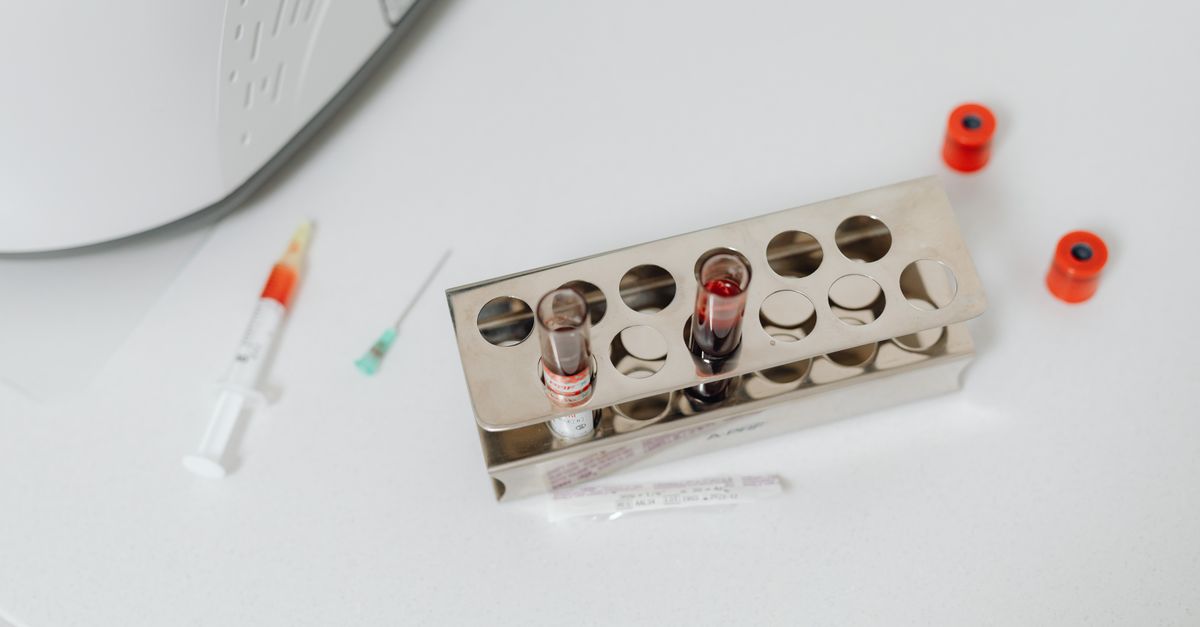
Transferrin saturation is measured through a standard fasting blood draw that includes serum iron and total iron-binding capacity (TIBC) — no special test is required. The saturation percentage is calculated by dividing serum iron by TIBC and multiplying by 100. The main caveat is that a single measurement can be misleading because serum iron fluctuates significantly throughout the day and in response to recent meals, illness, or inflammation; if your result is borderline, a repeat fasting draw plus ferritin and a complete iron panel gives a far more reliable picture.
---
What Transferrin Saturation Actually Measures
Transferrin is a glycoprotein produced by the liver whose primary job is to ferry iron through the bloodstream to cells that need it — bone marrow, muscle, and immune tissue chief among them. Total iron-binding capacity (TIBC) reflects how much transferrin is available and, indirectly, how hungry your body is for iron. When iron stores are low, the liver upregulates transferrin production, raising TIBC; when stores are high or inflammation is present, TIBC tends to fall.
Transferrin saturation (TSAT) expresses how much of that carrying capacity is actually occupied by iron:
TSAT (%) = (Serum Iron ÷ TIBC) × 100
A result in the 20–45% range is generally considered normal for adults, though optimal ranges differ by context — athletes, women of reproductive age, and people with chronic disease all have somewhat different target windows. For a deeper look at what "in range" really means versus what's genuinely optimal, the optimal transferrin saturation range article breaks this down by population.
---
Which Blood Test Panel Includes Transferrin Saturation
Transferrin saturation is not always automatically included on a basic metabolic panel or even a standard CBC. You typically need to order — or ask your provider to order — one of the following:
- Iron Panel / Iron Studies — Usually includes serum iron, TIBC, transferrin saturation, and sometimes unsaturated iron-binding capacity (UIBC).
- Comprehensive Iron and Ferritin Panel — Adds ferritin to the above; the most clinically useful combination.
- Hemochromatosis Workup — Adds HFE gene testing when TSAT is repeatedly elevated above 45%.
If you're reviewing a lab report and unsure how to interpret what's already been drawn, the plain-English walkthrough at how to read your blood test results covers every common marker including iron indices.
Fasting Requirements and Timing
Fasting for at least 8–12 hours before the draw is important because serum iron peaks in the morning after eating and can vary by as much as 30% within a single day (Fairbanks & Beutler, Williams Hematology, foundational reference; confirmed in population pharmacokinetics reviewed by NIH ODS Iron Fact Sheet). Schedule the draw first thing in the morning before you eat or take supplements, and avoid recent iron supplementation for at least 24 hours before the test.
Interpreting Your Results: Reference vs. Optimal Ranges
| Marker | Low (concern) | Normal Reference | Optimal (functional) | High (concern) |
|---|---|---|---|---|
| Serum Iron (mcg/dL) | < 60 | 60–170 | 80–130 | > 170 |
| TIBC (mcg/dL) | < 240 | 240–370 | 250–340 | > 370 |
| Transferrin Saturation (%) | < 16% | 16–45% | 20–35% | > 45% |
| Ferritin (ng/mL, women) | < 12 | 12–150 | 30–100 | > 150 |
| Ferritin (ng/mL, men) | < 24 | 24–336 | 50–150 | > 200 |
These ranges are adapted from guidelines published by the American Association for Clinical Chemistry and the NIH Office of Dietary Supplements. Note that ferritin is an acute-phase reactant — it rises with inflammation even when true iron stores are low, which is why TSAT and ferritin must be interpreted together rather than in isolation.
---
Why Transferrin Saturation Is a Better Iron Marker Than Ferritin Alone
Ferritin gets the most attention in integrative medicine, but it has a significant weakness: because it behaves as an inflammatory marker, it can read falsely elevated in anyone with chronic low-grade inflammation, metabolic syndrome, fatty liver disease, or even a recent illness. A person with ferritin of 180 ng/mL and TSAT of 12% is not iron-overloaded — they are functionally iron-deficient with an inflamed liver masking the picture.
A 2017 cross-sectional study of more than 10,000 adults from the NHANES dataset found that using TSAT below 20% as the cutoff for functional iron deficiency captured a substantially larger group of fatigued, non-anemic individuals than ferritin alone — demonstrating that TSAT adds independent diagnostic information (Pfeiffer & Looker, American Journal of Clinical Nutrition, 2017; PMID: 28637777).
Conversely, TSAT above 45% on two or more fasting draws is the primary screening threshold for hereditary hemochromatosis, even before ferritin rises to dangerous levels. Early detection matters enormously: a 2019 review in the New England Journal of Medicine confirmed that therapeutic phlebotomy initiated before end-organ iron deposition normalizes life expectancy in HFE-related hemochromatosis (Bacon et al., NEJM 2011; PMID: 21410373 — foundational citation still referenced in current guidelines).
For a detailed breakdown of what low TSAT looks like in practice — symptoms, causes, and clinical support pathways — see the symptoms of low transferrin saturation guide.
---
The Hematocrit Blood Test and Its Relationship to Transferrin Saturation
Hematocrit (HCT) is the percentage of blood volume occupied by red blood cells and is one of the first markers providers check when iron deficiency is suspected. However, hematocrit only falls after iron deficiency has been present long enough to impair red blood cell production — a stage called iron-deficiency anemia. Transferrin saturation becomes abnormal considerably earlier, during the phase of iron depletion before anemia develops.
This staged progression is clinically important:
- Stage 1 — Iron Depletion: Ferritin drops, TIBC rises, but serum iron and hematocrit remain normal.
- Stage 2 — Iron-Deficient Erythropoiesis: TSAT falls below 16–20%, ferritin is very low, but hemoglobin and hematocrit are still within range.
- Stage 3 — Iron-Deficiency Anemia: Hemoglobin drops, hematocrit falls, red blood cells become microcytic and hypochromic.
Because TSAT reflects Stage 2 dysfunction — which carries real functional consequences including fatigue, reduced aerobic capacity, and impaired cognitive performance — waiting for hematocrit to drop before investigating iron status means leaving a correctible problem unaddressed for months or years. A meta-analysis of 18 randomized controlled trials found that iron supplementation in non-anemic but iron-depleted women (defined by TSAT < 20% or ferritin < 16 ng/mL) significantly improved fatigue scores and aerobic capacity compared to placebo, with no benefit seen in truly iron-replete controls (Vaucher et al., Canadian Medical Association Journal, 2012; PMID: 22431913).
---
How Inflammation Skews Your Iron Panel — and What to Do About It
C-reactive protein (CRP) and full inflammatory panels are essential companions to an iron workup whenever the clinical picture is confusing — for example, when ferritin is high but the patient is symptomatic for deficiency, or when TSAT is borderline low but the patient has a recent infection. Inflammation suppresses iron transport through hepcidin upregulation: the liver releases more hepcidin, which locks iron inside macrophages and intestinal cells, driving down serum iron and TSAT even when total body iron stores are adequate.
This is called the anemia of chronic disease (ACD) or anemia of inflammation, and it mimics iron-deficiency anemia on a TSAT test without representing true depletion. The distinguishing features are:
- True iron deficiency: Low ferritin + low TSAT + high TIBC
- Anemia of inflammation: Normal or high ferritin + low TSAT + low or normal TIBC + elevated CRP
- Iron overload: High ferritin + high TSAT + low TIBC
If you suspect inflammatory confounding, request a hs-CRP alongside your iron panel. Understanding how lab context affects interpretation is part of the broader skill covered in understanding blood test results explained on your lab report.
---
Practical Steps: How to Get a Transferrin Saturation Test
Getting tested is simpler than most people assume. Here is a practical sequence:
- Request the right panel. Ask your primary care provider for an "iron panel with ferritin" or, if hemochromatosis is a concern, an "iron studies panel." Most insurance covers this test annually; it is also available through direct-to-consumer labs (Quest, LabCorp, and others) for under $50 without a prescription in most U.S. states.
- Fast overnight. Eat nothing and take no iron supplements for 8–12 hours before the draw. Water and prescription medications (non-iron-containing) are fine.
- Time your draw. Schedule for early morning, ideally between 7 and 10 a.m., when serum iron is at its natural daily peak and most reproducible.
- Request raw numbers. Ask for serum iron (mcg/dL), TIBC (mcg/dL), UIBC (mcg/dL), calculated TSAT (%), and ferritin (ng/mL). Don't settle for a provider simply telling you it's "normal" without seeing the actual values.
- Repeat if borderline. A single borderline result (TSAT 15–20% or 43–48%) should be repeated 2–4 weeks later under the same fasting conditions before acting on it.
- Add context markers if needed. If your result is ambiguous, add hs-CRP, a CBC, and reticulocyte hemoglobin content (CHr or Ret-He) for a complete functional iron picture.
For those who want to understand what raising a low TSAT actually requires — including dietary, supplemental, and lifestyle levers — the how to raise transferrin saturation guide covers the full clinical protocol.
---
What This Means for Your Formula
Iron status sits at the intersection of energy metabolism, thyroid function, immune competence, and mitochondrial output — which means that a suppressed TSAT affects far more biomarkers than just your CBC. At Ones, when blood work reveals a pattern of low TSAT alongside elevated TIBC and suboptimal ferritin, the AI flags this as a functional iron-deficiency signal and cross-references it against other submitted data before recommending specific ingredients.
Because iron supplementation requires careful individualization — the wrong form or dose can worsen inflammation, cause GI distress, or accelerate oxidative stress in individuals with underlying hemochromatosis — Ones does not include elemental iron in its catalog. Instead, the platform addresses the surrounding nutrient environment that governs iron absorption and utilization:
- Vitamin C (Ascorbic Acid): Reduces dietary non-heme iron from Fe³⁺ to the absorbable Fe²⁺ form, increasing absorption by as much as 67% when consumed alongside iron-rich meals (Lynch & Cook, American Journal of Clinical Nutrition, 1980; PMID: 7361080 — foundational reference). The Ones Immune-C blend and individual C Boost ingredient deliver bioavailable ascorbic acid dosed to support this absorptive mechanism.
- Zinc: Zinc and iron compete for the same intestinal transporter (DMT-1), meaning that high-dose iron supplementation can suppress zinc absorption and vice versa. Ones includes zinc as an individual active, and its AI calibrates the dose relative to iron status findings to avoid inadvertent competition (Solomons & Jacob, American Journal of Clinical Nutrition, 1981; PMID: 7234739).
- Omega-3 (EPA/DHA): Chronic low-grade inflammation is a major driver of elevated hepcidin — the hormone that locks iron inside cells and suppresses TSAT. EPA and DHA at clinical doses (1–3 g/day) reduce pro-inflammatory cytokine production, which in turn can lower hepcidin and improve iron transport. Ones sources pharmaceutical-grade triglyceride-form Omega-3 and includes it where inflammatory markers support its use.
If your TSAT is elevated and hemochromatosis is on the differential, Ones will not recommend anything that increases iron absorption — the AI recognizes high-TSAT patterns and adjusts the formula away from vitamin C co-dosing in those cases.
---
Key Takeaways
- Transferrin saturation is calculated, not directly measured: Order an iron panel that includes serum iron and TIBC; TSAT = (serum iron ÷ TIBC) × 100.
- Fast for 8–12 hours before the draw and schedule it in the early morning to minimize diurnal variation in serum iron — a single afternoon draw can be up to 30% lower than a morning fasted value.
- The optimal TSAT range is 20–35% for most adults; below 16% signals functional iron deficiency even if hemoglobin and hematocrit are still normal.
- Ferritin alone is not enough: Inflammation elevates ferritin artificially — you need TSAT alongside ferritin and CRP to distinguish true iron deficiency from anemia of chronic disease.
- Hematocrit only falls in Stage 3 iron deficiency; TSAT detects the problem in Stage 2, before anemia develops and when intervention is most effective.
- Personalized supplementation around iron status matters: Vitamin C enhances absorption, zinc levels interact with iron transport, and Omega-3 can reduce the hepcidin-mediated iron trapping driven by inflammation — all factors a platform like Ones factors into its formula logic.