Lab Results
What Does Low hs-CRP Mean for Your Health?
Most people worry about high CRP, but a low hs-CRP result can leave you equally confused — especially if you still feel unwell. Understanding what low hs-CRP actually signals, and when it's genuinely reassuring versus misleading, can change how you interpret your entire inflammation picture.
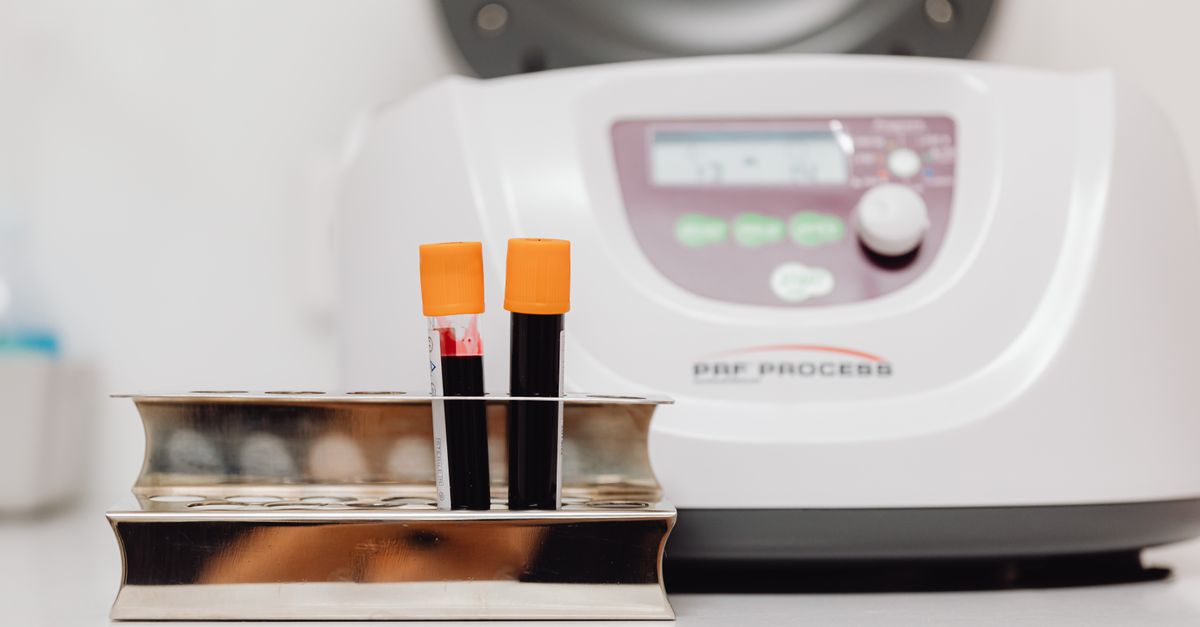
What Does Low hs-CRP Mean for Your Health?
A low hs-CRP — generally below 1.0 mg/L — is almost always a favorable sign, indicating minimal systemic inflammation. For most healthy adults, this is the goal. The main caveat: a low result doesn't rule out localized inflammation, autoimmune flares, or non-inflammatory causes of fatigue and symptoms. The exception is anyone on immunosuppressants or high-dose corticosteroids, where artificially suppressed CRP can mask active disease.
---
What hs-CRP Actually Measures
High-sensitivity C-reactive protein (hs-CRP) is a plasma protein produced by the liver in response to inflammatory cytokines — primarily interleukin-6 (IL-6) and tumor necrosis factor-alpha (TNF-α). Unlike the standard CRP test (which detects values above 10 mg/L and is used to flag acute infection or injury), hs-CRP uses a more sensitive assay capable of detecting concentrations as low as 0.1 mg/L. This makes it useful for assessing low-grade, chronic inflammation that standard CRP would miss entirely.
CRP rises and falls relatively quickly — it has a half-life of approximately 19 hours — which means it reflects your inflammatory status in recent days, not months. A single low reading after a period of illness may look reassuring but not capture the full picture (Pearson et al., Circulation 2003; PMID: 12525537).
Reference Ranges vs. Optimal Ranges
| Category | hs-CRP (mg/L) | Clinical Interpretation |
|---|---|---|
| Optimal / Low Risk | < 1.0 | Minimal systemic inflammation |
| Intermediate Risk | 1.0 – 3.0 | Moderate cardiovascular risk |
| High Risk | > 3.0 | Elevated cardiovascular risk |
| Active Inflammation | > 10.0 | Likely acute infection or injury |
| Below Detection | < 0.3 | Very low — generally excellent |
These cut-points come from the American Heart Association and CDC joint scientific statement, which established the three-tier classification still used in most labs today (Pearson et al., 2003; PMID: 12525537).
---
What a Low hs-CRP Result Actually Tells You
In most cases, an hs-CRP below 1.0 mg/L is genuinely good news. It suggests:
- Low cardiovascular risk from inflammation. The landmark JUPITER trial (Ridker et al., NEJM 2008; PMID: 18997196) enrolled roughly 17,802 participants with LDL below 130 mg/dL but hs-CRP ≥ 2.0 mg/L. Those treated to reduce hs-CRP below 1.0 mg/L had a 44% reduction in major cardiovascular events. Conversely, people who start with hs-CRP below 1.0 mg/L already sit in the lowest risk category.
- Effective anti-inflammatory lifestyle habits. Regular aerobic exercise, Mediterranean-pattern eating, adequate sleep, and low visceral adiposity all suppress baseline CRP levels. A low reading often reflects these behaviors.
- No acute infection or tissue injury. CRP will spike within 6–12 hours of significant infection. A value well below 1.0 mg/L effectively rules out major acute-phase responses.
What a low hs-CRP does not tell you is whether your thyroid is functioning optimally, whether your iron stores are adequate, or whether you have subclinical nutrient deficiencies driving fatigue. If you have a low hs-CRP and still feel unwell, the inflammation story may simply not be the relevant chapter — and that's important clinical information in itself. Reviewing related markers like folate status and hemoglobin alongside your CRP can help build a more complete picture; for context on why normal-range results can still leave you symptomatic, see why your folate can be normal but still feel awful.
---
When a Low hs-CRP Can Be Misleading
There are specific situations where a low or undetectable hs-CRP is not reassuring:
1. Medication suppression. Corticosteroids (prednisone, dexamethasone), NSAIDs, statins, and hydroxychloroquine all lower CRP independently of actual inflammatory burden. A patient with active lupus flares on high-dose prednisone may show a hs-CRP of 0.4 mg/L while tissue inflammation continues (Gabay & Kushner, NEJM 1999; PMID: 9971870).
2. Timing of the test. Because CRP has such a short half-life, a result taken immediately after a brief anti-inflammatory dietary period — say, several days of fasting or alcohol cessation — may not reflect habitual status. Ideally, hs-CRP is measured after at least two weeks of your routine diet and activity pattern, with no acute illness in the prior month.
3. Misleading reassurance in autoimmune conditions. Certain autoimmune diseases, particularly systemic lupus erythematosus (SLE), characteristically produce a low or normal CRP response even during active flares — because the immune dysregulation in SLE preferentially elevates interferon-alpha, which paradoxically suppresses CRP synthesis. Rheumatoid arthritis, in contrast, typically shows elevated CRP. So a low CRP in someone with suspected lupus is not the reassurance it would be for a healthy adult.
4. Non-inflammatory causes of symptoms. Fatigue, brain fog, poor sleep quality, and mood disturbance can arise from entirely non-inflammatory mechanisms — hypothyroidism, low ferritin, sex hormone imbalances, or HPA axis dysregulation — none of which reliably move CRP. If you're experiencing these symptoms despite a clean inflammation panel, reading about what it means when all your labs are normal but you still feel different may reframe how you're approaching your results.
---
Can hs-CRP Be Too Low?
This is a question that comes up occasionally, and the short answer is: not in any clinically meaningful way for otherwise healthy people. There is no established lower threshold below which CRP causes harm. Very low values — below 0.3 mg/L — are seen in people with exceptional anti-inflammatory diets or vigorous training, and this is not associated with adverse outcomes in population data.
However, in research contexts, extremely suppressed inflammatory signaling (via pharmaceutical immunosuppression) has been associated with impaired pathogen clearance. That is a medication effect, not a consequence of naturally low CRP. Eating well and having low hs-CRP is simply a healthy state.
---
hs-CRP in Context: Which Other Biomarkers Matter Alongside It?
hs-CRP is most informative when read alongside complementary markers. Here's how it integrates with the rest of a standard or advanced panel:
| Companion Biomarker | Why It Matters With hs-CRP |
|---|---|
| Ferritin | High ferritin may reflect inflammation masking true iron stores; low hs-CRP + low ferritin suggests true depletion |
| HbA1c / fasting insulin | Insulin resistance elevates hs-CRP; normal CRP + elevated insulin = early metabolic risk |
| Homocysteine | Independent cardiovascular risk marker; can be elevated even with low hs-CRP |
| ApoB | A more sensitive LDL particle risk measure; ApoB + hs-CRP together predict risk better than either alone |
| IL-6 | Upstream driver of CRP; elevated IL-6 with low CRP is unusual but possible in early/resolving inflammation |
| Thyroid panel (TSH, Free T4) | Hypothyroidism raises cardiovascular risk independent of inflammation |
Low transferrin saturation alongside a low hs-CRP, for example, is a useful combination: it suggests iron deficiency without an inflammatory confound — since inflammation artificially lowers transferrin saturation. Understanding what low transferrin saturation means can add another layer to this interpretation.
Similarly, if you're experiencing unexplained fatigue and your hs-CRP is normal, checking what low hematocrit means alongside a full iron panel may surface a more actionable finding.
---
Lifestyle Factors That Keep hs-CRP Low
If you already have a low result, maintaining it is worth understanding. The evidence-based factors with the strongest effect on CRP reduction include:
- Body composition. Adipose tissue — especially visceral fat — is itself an inflammatory organ. Every kilogram of visceral fat lost is associated with measurable CRP decline. A 2012 meta-analysis of 98 randomized trials found that exercise reduced hs-CRP by a mean of 0.31 mg/L (Hayashino et al., Archives of Internal Medicine 2012; PMID: 22710272).
- Omega-3 fatty acids (EPA/DHA). EPA and DHA competitively inhibit arachidonic acid conversion to pro-inflammatory prostaglandins and reduce IL-6 and TNF-α signaling. A meta-analysis of 68 trials found omega-3 supplementation significantly reduced CRP compared to placebo (Calder, Biochimie 2013; PMID: 23295207). The dose matters — effects become consistent above roughly 2g EPA+DHA per day.
- Sleep quality and duration. Sleeping fewer than 6 hours per night is consistently associated with elevated CRP. The pathway involves HPA axis dysregulation and elevated cortisol overnight, which primes IL-6 release.
- Alcohol reduction. Even moderate chronic alcohol consumption elevates baseline inflammatory markers. Abstinence or significant reduction produces measurable CRP decline within weeks.
- Polyphenol-rich foods. Curcumin, resveratrol, quercetin, and EGCG from green tea have all shown CRP-lowering effects in randomized trials, though effect sizes at typical dietary doses are modest compared to pharmaceutical interventions.
---
What This Means for Your Formula
If your hs-CRP is already low, the priority in a personalized supplement plan shifts from anti-inflammatory intervention toward maintenance support and addressing whatever other deficits your labs reveal — because a low hs-CRP tells you inflammation isn't the bottleneck right now.
For users whose Ones formula is built with inflammation in mind, here are the directly relevant ingredients the platform draws from:
- Omega-3 (EPA/DHA): Ones includes high-quality omega-3 sourced to meaningful clinical doses. The EPA/DHA combination is the most consistently evidence-backed dietary intervention for sustained hs-CRP reduction — relevant whether your CRP is being brought down from a high value or maintained at a healthy one (Calder, 2013; PMID: 23295207).
- Magnesium Complex: Ones carries a proprietary Magnesium Complex blend. Magnesium deficiency independently elevates inflammatory markers including CRP — partly because magnesium inhibits NF-κB activation. People with adequate magnesium status consistently show lower baseline CRP in population studies.
- Liver Support (System Blend): Because CRP is synthesized in the liver, hepatic health is directly relevant to CRP dynamics. Ones' proprietary Liver Support blend is included in formulas where liver burden or detoxification markers warrant it — not as a default, but where the biomarker picture supports it.
If inflammation isn't your primary finding, Ones' AI practitioner will identify which systems actually need support based on your full lab panel and health history — rather than defaulting to a generic anti-inflammatory stack. You can also read more about understanding high hs-CRP and whether you should try to lower it if your result is in the elevated range.
---
Key Takeaways
- Low hs-CRP (below 1.0 mg/L) is generally excellent news — it places you in the lowest cardiovascular risk category from an inflammatory standpoint and reflects effective anti-inflammatory habits or low baseline inflammatory load.
- It can be misleading in specific scenarios: medication suppression (steroids, NSAIDs, statins), certain autoimmune diseases like SLE, or timing effects from short-term dietary changes.
- A low hs-CRP does not rule out other causes of fatigue or illness — iron deficiency, thyroid dysfunction, sex hormone imbalance, and nutrient deficits can all produce significant symptoms with entirely normal CRP.
- The result is most useful in context — read alongside ApoB, ferritin, homocysteine, transferrin saturation, and a full thyroid panel for a complete cardiovascular and metabolic risk picture.
- Omega-3 (EPA/DHA) and magnesium are the two supplemental interventions with the strongest evidence base for maintaining low CRP over time, especially when dietary intake is insufficient.
- If your hs-CRP is low but you still feel unwell, the next step is investigating non-inflammatory biomarkers — your CRP result has effectively closed one diagnostic door and pointed you toward others.
---
This article is for informational purposes only and does not constitute medical advice. Consult a qualified healthcare provider before making changes to your supplement or medication regimen.